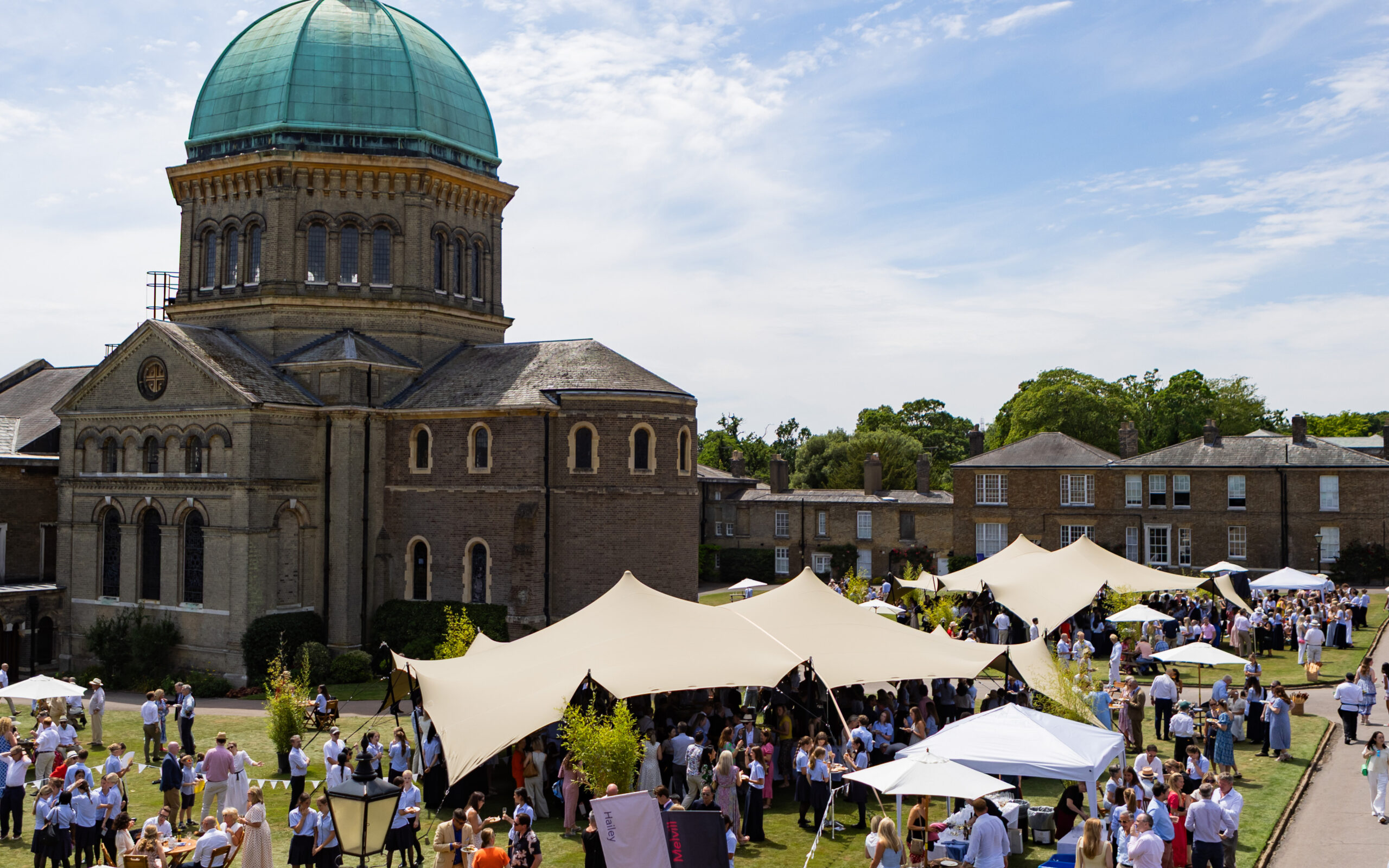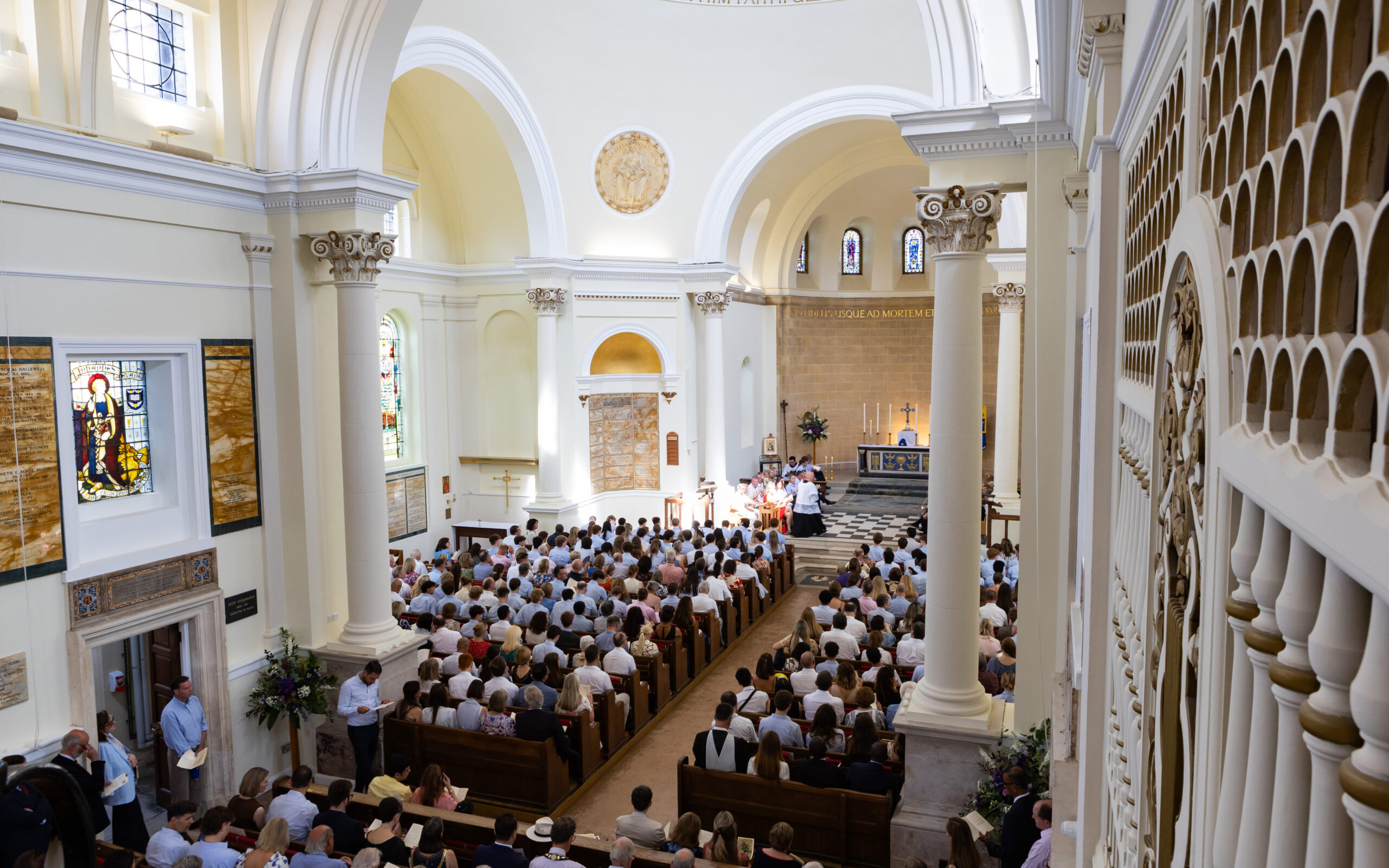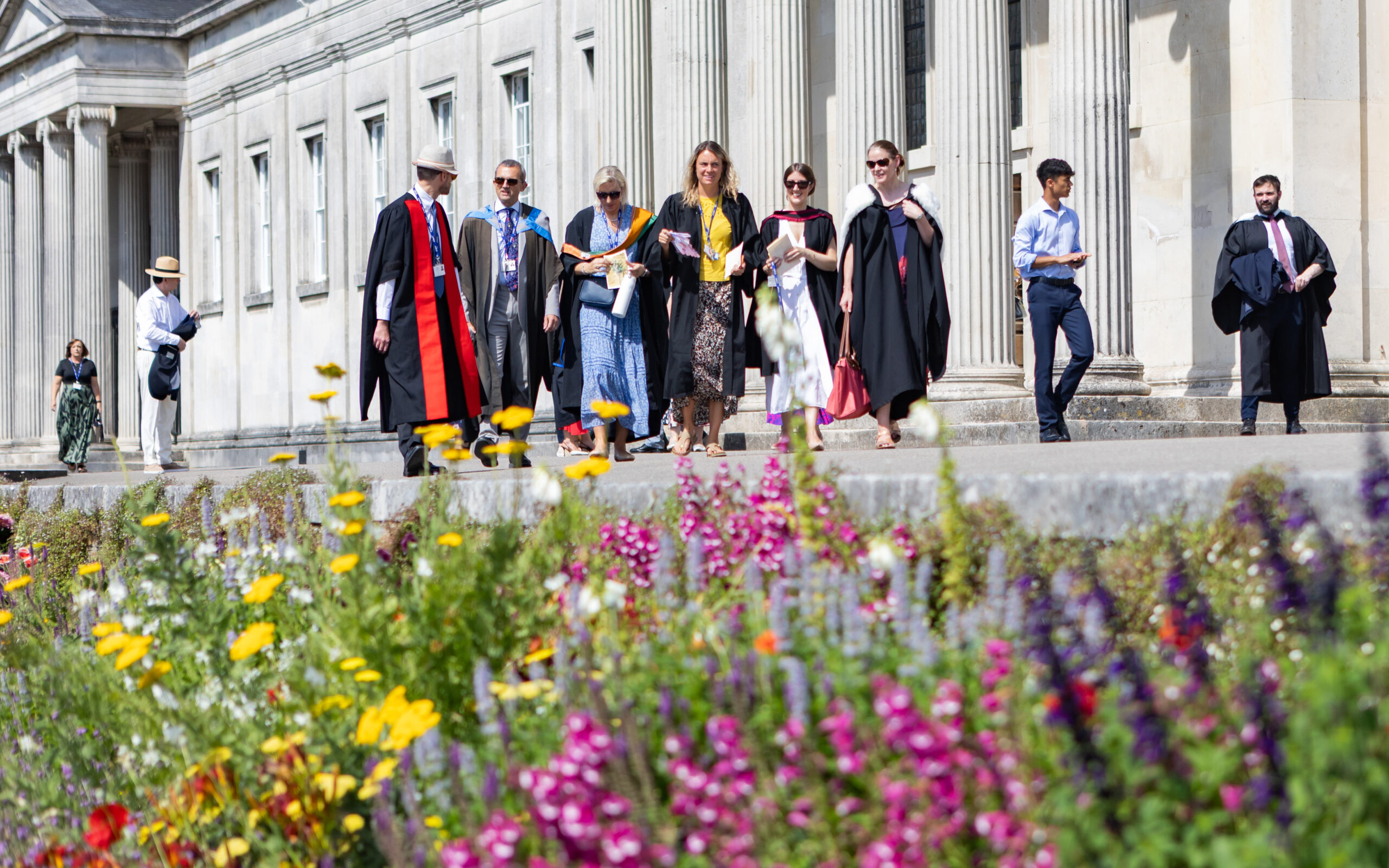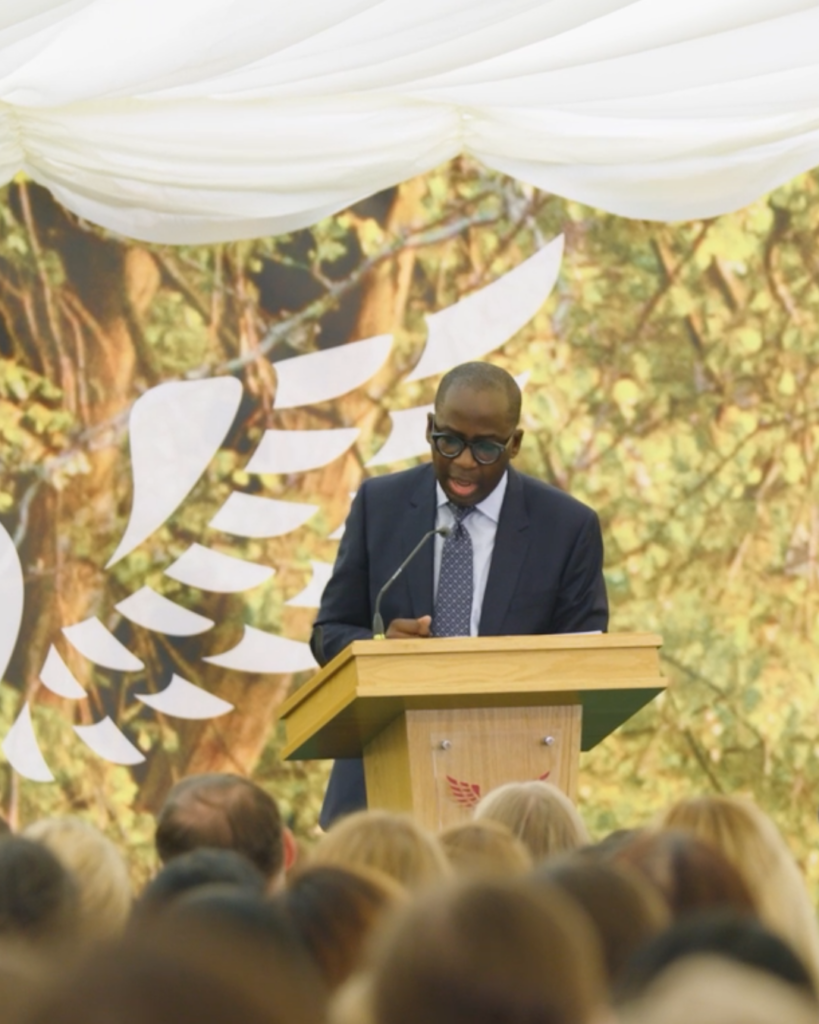
Speech Day is always a highlight of the School year, offering a moment to reflect on the past year and celebrate the achievements of our pupils.
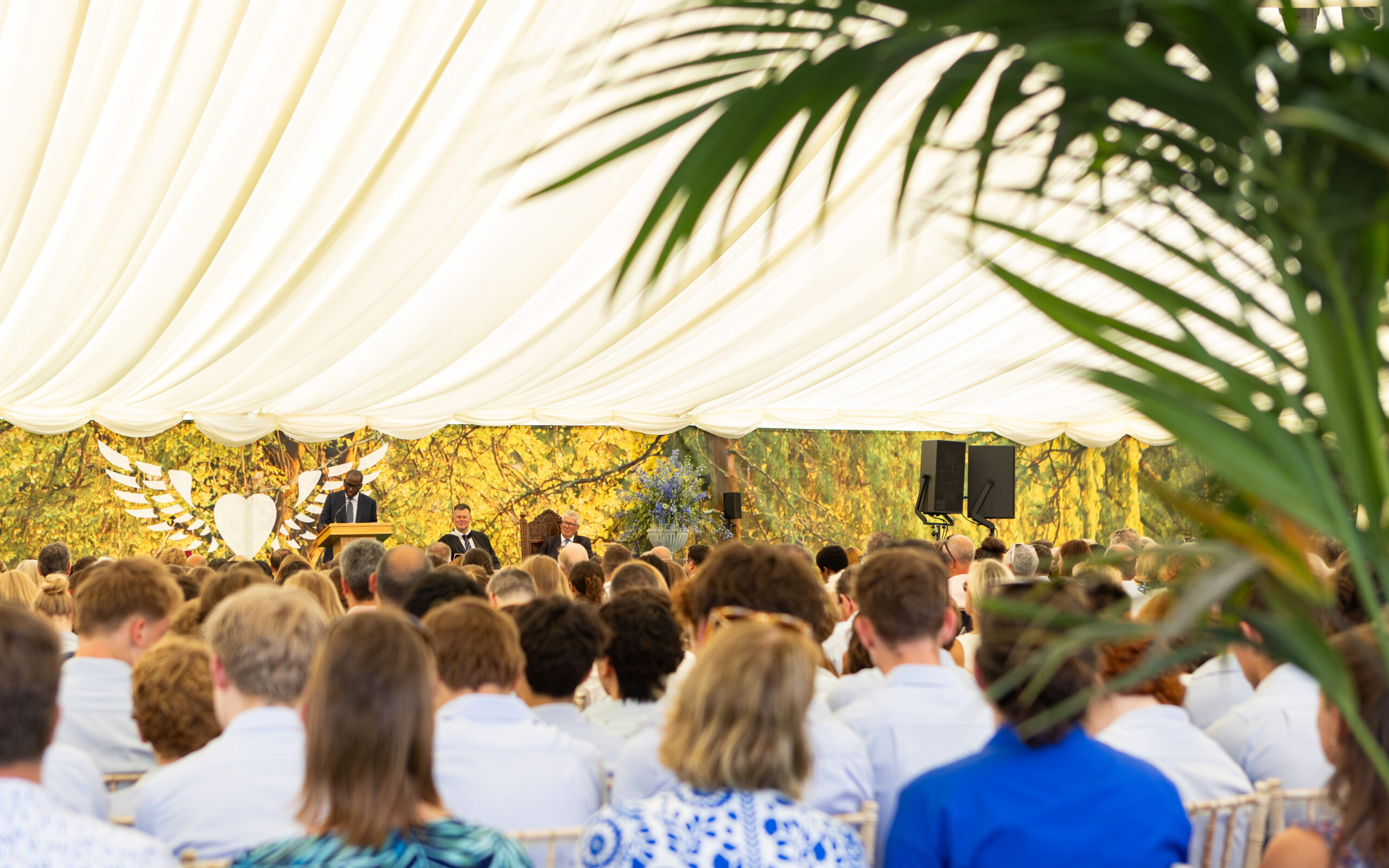
Following a reflective Commemoration Service, we came together for the Prizegiving Ceremony, where we were delighted to welcome back OH Dr Olajide Williams (Batten, 1988) as our Guest of Honour. His speech delivered an inspiring and uplifting message to all in attendance and we are so grateful to him for being part of this special day.
For those who were unable to join us, or who would like to revisit his words, a full transcript is included below.
Good afternoon, Master, Housemasters, Chair, Governors, teachers, parents, distinguished guests and most importantly, the students gathered here today. It is a profound honour to return to Haileybury and stand before you on Speech Day.
It is amazing to think that I began here in the Removes 43 years ago, because it still feels like yesterday. I remember the day I arrived here, a young boy filled with fear and anxiety, carrying dreams I could barely articulate. That feeling was not new. I experienced it a few years earlier, newly arrived from Lagos, Nigeria, when my mother had dropped me off at a prep school in Middlesex a few months before my 10th birthday. I still remember trembling in the arms of the school matron. In an instant, I had been uprooted from everything I had known and planted into an unfamiliar world. The loneliness was profound.
I still remember my first day at Batten House, meeting my Housemaster, the late Reverend Steward, meeting fellow Removes in adjacent comparts of the old, long, intimidating dormitories which have thankfully since been replaced by smaller study bedrooms. Yet despite the challenges of that environment, I remain deeply grateful for the friendships I formed here, friendships that continue to enrich my life today.
At the time, girls were only admitted into the Sixth Form years at Haileybury and not co-ed like today. Indeed, for those of us in the lower years, the female population of the School occupied an almost mythical status. We had heard plenty about them, but actual sightings were rare. So you can imagine how strange it is for me to look out at this audience today and realise that what was once a rare and mysterious phenomenon has become delightfully commonplace.
I remember my rugby matches on Terrace Field and my cricket matches on the Pavilion Ground. During one match, I fractured my wrist diving for a catch and landing awkwardly on my outstretched hand. I must have thought I was Ben Stokes, but the truth is that my cricketing talent was considerably smaller than my enthusiasm for the game.
I found greater success on the squash court, where I was the number one ranked player on the School’s senior squash team. At the time, I was convinced this achievement would open doors throughout my life. I can report that it has not come up once in a faculty meeting at Columbia University. And in all my years as a neurologist, not a single patient has ever said, “Before you treat my stroke, doctor, what was your squash ranking at school?”
I loved choir practice with the legendary Jack Hindmarsh; the privilege of singing at Sadler’s Wells and in so many incredible Chapel concerts. There was Mozart’s Requiem Mass, Handel’s Messiah, The Creation by Haydn, and Christmas carol services. There was the experience of representing Haileybury on the debate team at regional and national contests. And of course there was CCF: map reading, first aid, charging through forests, polishing my cadet boots before weekly parades. Those experiences opened horizons far beyond the classroom and introduced me to worlds I might otherwise never have discovered.
One of the greatest surprises of my time here came when I was named Vice Head of School. I am still not entirely sure how that happened. Had someone told my younger Removes self that I would one day be Vice Head of School, I would have seriously believed that they were mocking me. It was a surreal experience. Suddenly, I found myself living in Elysium and striking the gong before meals. Every day, I recited the Latin grace: Benedic, Domine, nos et dona tua, quae de largitate tua sumus sumpturi, per Jesum Christum Dominum nostrum. I repeated it so many times that, more than forty years later, it still occupies valuable space in my memory. And as a neurologist, I can assure you that there are many more useful things I could have stored there.
As I look back on my years at Haileybury, I am reminded of a story from one of my favorite books. Paulo Coelho’s The Alchemist. A merchant sent his son to learn the secret of happiness from the wisest man in the world. After a long journey through the desert, the boy arrived at a magnificent palace. Wading through the crowd, he finally found the wise man and asked his burning question, “What is the secret of happiness?” But instead of answering his question, the wise man handed him a spoon containing two drops of oil and instructed him to tour the palace without spilling them. When he returned the wise man would answer his question.
The boy spent hours walking through the palace, his eyes fixed on the spoon. When he returned, the wise man asked whether he had seen the magnificent gardens, the tapestries, the historic library, the great works of art.
The boy confessed that he had noticed none of them. He had been too focused on protecting the oil from spilling out of the spoon. So the wise man sent him back to tour the house still holding the spoon with two drops of oil. This time the boy admired everything: the artworks, gardens, architecture, the beauty of the world around him. But when he returned, the oil was gone.
The wise man smiled and said: “The secret of happiness is to see all the marvels of the world, and never to forget the drops of oil on the spoon.”
As I look back in time, these words rise to the surface. Haileybury gave me many of the marvels. The thrill of competition. The privilege of being immersed in great music and literature. But there were also the drops of oil on the spoon. Character. Resilience. Discipline. Responsibility. Integrity. The understanding that achievement means little if you lose yourself in the process.
We must not stare so intently at the spoon that we miss the beauty of the world around us. We must not become so captivated by the world that we forget what we have been entrusted to carry. The challenge is to do both. To pursue excellence without losing kindness. To build careers without neglecting family. To embrace ambition without sacrificing integrity. To see the wonders of the world while protecting the values that make life meaningful.
There is a tree on this very field that many of you know well. At 2:35 in the afternoon on June 2, 1898, it was struck by lightning. Scarred, weathered and tested by forces beyond its control, it nevertheless remained standing. That wound did not end its story; rather, it became part of the tree’s identity. And today, it is known simply as Lightning Oak.
There are times when we too are tested by forces beyond our control, when life leaves its mark upon us. My own journey has been no different. There has been joy and pain. Moments of belonging and moments of profound loneliness. Moments of exaltation and moments spent in dark valleys. Many of those moments unfolded right here at Haileybury.
Carl Jung once wrote: “No tree, it is said, can grow to heaven unless its roots reach down to hell.”
Now imagine the depths of Lightning Oak’s roots. They reach into darkness most of us never see. They endured the lightning strike, weathered countless storms and still support the magnificent height of the tree. Perhaps that is Jung’s point: the height of our ascent is often determined by the depth of our roots.
After Haileybury, I returned to Nigeria for medical school. It was not the path I had imagined for myself. The truth is that my A level grades were not good enough for the universities that had offered me conditional places. At the time, it felt like a failure. But perhaps that was part of what Jung meant. Before a tree reaches toward the heavens, its roots must grow into darkness. What appeared to be a setback was actually part of the foundation. The roots were growing, even though I could not yet see what they would eventually support.
Life is rarely linear. It seldom unfolds in straight lines. To me, success is not a ladder; it is a winding path through fog. Even now, I can only see a few steps ahead. Sometimes I move sideways. Sometimes I move backward. Sometimes I lose the trail entirely. Yet somehow the path continues. It is what brought me here today.
I graduated from medical school in Nigeria and eventually moved to New York. Today, I serve as a neurology professor at Columbia University and as one of the medical school deans. I care for children and adults living with neurological disorders, especially stroke. Over the years, I have saved lives and lost lives. Rejoiced with families and cried after they left. Along the way, I founded Hip Hop Public Health with rap legend Doug E. Fresh. Together, we used music to improve health literacy in underserved communities. That journey led us to collaborate with artists ranging from Ariana Grande to Public Enemy’s Chuck D, from Run-DMC to Blink-182’s Travis Barker. It took us to the Obama White House, where we were invited year after year, and ultimately to producing Songs for a Healthier America for Former First Lady Michelle Obama’s childhood obesity initiative.
People often ask how a neurologist ends up producing a rap album for the First Lady of the United States. The truth is, I am not entirely sure. But I do know this: the seeds of that creativity were planted here at Haileybury.
If there is one thing I have learnt, it is that neither accomplishments nor disappointments define a life. Degrees matter. Achievements matter. Titles matter. But they are not the whole story. What matters most is not the destination, but the person you become on the journey there. In the end, it is not about what you have, what you earn, or where you sit. It is about who you are.
You will live through a remarkable century. Artificial intelligence is reshaping how we work. Biotechnology is changing how we treat disease. Climate change is forcing humanity to rethink its relationship with the planet. The careers many of you eventually pursue do not yet exist. The challenges you will face cannot be fully predicted. Yet some things will never become obsolete. Courage. Curiosity. Integrity. Kindness. Respect. Service. The willingness to stand up for people who have less power than you do. These qualities are timeless. They are values that Haileybury champions, encoded in the 4 pillars of Haileybury’s 2030 plan. Yes, the world needs brilliant people. But it needs good people more.
To the students sitting here today, I want to leave you with four thoughts.
First, be ambitious. Dream boldly. Attempt things that frighten you. Apply for the opportunity. Take the risk. Raise your hand. The future more often belongs to people willing to venture beyond certainty.
Second, do not fear setbacks. A poor exam result. A rejection letter. A disappointment. A failure. These moments feel enormous when they happen to you. But years later, many of them will reveal themselves as important detours on the road to becoming.
Third, cultivate deep roots. The world celebrates visibility. But lasting growth happens underground. Develop your character when no one is watching. Build friendships that endure. Practice humility. Practice gratitude – I have found that gratitude is the best way to build resilience. Because when storms arrive – and believe me they will – deep roots matter more than broad branches.
Fourth, be good. The world will always admire intelligence, achievement, wealth and influence. But what it needs most is goodness. Be the person who tells the truth when it is difficult, who stands up for someone with less power than you and who treats others with dignity, especially when there is nothing to gain from doing so. The measure of a life is not simply what you accomplish, but how many lives are better because you were here.
As I look around today, I am reminded of the young boy who arrived here decades ago so often uncertain of himself and what his future might hold. Yet standing here now, I realise that Haileybury gave me something far greater than A and O levels. It gave me deep roots. Roots that sustained me in the depths of personal failure. Roots that anchored me through the ascent of success. Roots that continue to nourish me today.
And so, remember Lightning Oak. Remember Lightning Oak when adversity strikes. Remember Lightning Oak when you break through into the light. Remember that your deepest growth will often be invisible and that your greatest strength will emerge from your deepest trials. Like Lightning Oak, may your roots grow deep, your branches reach high and your spirit remain steadfast through every life storm.
Class of 2026, remember Lightning Oak. Your ascent has begun.
Thank you and congratulations to all of you on this Speech Day.